Program Outcomes (POs)
|
PO1 |
Engineering knowledge |
Apply knowledge of mathematics, natural science, computing, engineering fundamentals and an engineering specialization as specified in WK1 to WK4
respectively to develop the solution of complex engineering problems. |
|
PO2 |
Problem analysis |
Identify, formulate, review research literature and analyze complex engineering
problems reaching substantiated conclusions with consideration for sustainable development. (WK1 to WK4) |
|
PO3 |
Design / Development of Solutions |
Design creative solutions for complex engineering problems and design/develop systems/components/processes to meet identified needs with consideration for public health and safety, whole-life cost, net zero carbon, culture, society and
environment. (WK5) |
|
PO4 |
Conduct Investigations of Complex Problems | Conduct investigations of complex engineering problems using research-based knowledge including design of experiments, modelling, analysis &interpretation
of data to provide valid conclusions. (WK8) |
|
PO5 |
Engineering Tool Usage |
Create, select and apply appropriate techniques, resources and modern engineering & IT tools, including prediction and modelling, recognizing their
limitations to solve complex engineering problems. (WK2 and WK6) |
|
PO6 |
The Engineer and The World |
Analyze and evaluate societal and environmental aspects while solving complex engineering problems for its impact on sustainability with reference to economy, health, safety, legal framework, culture and environment. (WK1, WK5, and
WK7) |
| PO7 | Ethics | Apply ethical principles and commit to professional ethics, human values,
diversity and inclusion; adhere to national & international laws. (WK9 |
| PO8 | Individual and Collaborative Team Work | Function effectively as an individual, and as a member or leader in diverse/multi-
disciplinary teams. |
|
PO9 |
Communication |
Communicate effectively and inclusively within the engineering community and society at large, such as being able to comprehend and write effective reports and design documentation, make effective presentations considering cultural,
language, and learning differences. |
|
PO10 |
Project Management and Finance |
Apply knowledge and understanding of engineering management principles and economic decision-making and apply these to one’s own work, as a member and
leader in a team, and to manage projects in multidisciplinary environments. |
|
PO11 |
Life-Long Learning |
Recognize the need for, and have the preparation and ability for: (i) independent and life-long learning, (ii) adaptability to new and emerging technologies, and
(iii) critical thinking in the broadest context of technological change. (WK8) |
Knowledge and Attitude Profile (WK)
| WK1 | Natural Sciences and
Social Sciences |
A systematic, theory-based understanding of the natural sciences applicable
to the discipline and awareness of relevant social sciences. |
|
WK2 |
Mathematics and Data Analysis | Conceptually-based mathematics, numerical analysis, data analysis, statistics and formal aspects of computer and information science to support detailed
analysis and modelling applicable to the discipline. |
| WK3 | Engineering
Fundamentals |
A systematic, theory-based formulation of engineering fundamentals
required in the engineering discipline. |
|
WK4 |
Engineering Specialist Knowledge | Engineering specialist knowledge that provides theoretical frameworks and bodies of knowledge for the accepted practice areas in the engineering
discipline; much is at the forefront of the discipline. |
|
WK5 |
Engineering Design
and Environmental Considerations |
Knowledge, including efficient resource use, environmental impacts, whole-
life cost, re-use of resources, net zero carbon, and similar concepts, that supports engineering design and operations in a practice area. |
| WK6 | Engineering Practice
(Technology) |
Knowledge of engineering practice (technology) in the practice areas in the
engineering discipline. |
|
WK7 |
Role of Engineering in Society | Knowledge of the role of engineering in society and identified issues in engineering practice in the discipline, such as the professional responsibility
of an engineer to public safety and sustainable development. |
|
WK8 |
Research and Critical Thinking | Engagement with selected knowledge in the current research literature of the
discipline, awareness of the power of critical thinking and creative approaches to evaluate emerging issues. |
|
WK9 |
Ethics and Inclusive Behavior |
Ethics, inclusive behavior and conduct. Knowledge of professional ethics, responsibilities, and norms of engineering practice. Awareness of the need for diversity by reason of ethnicity, gender, age, physical ability, etc., with
mutual respect. |
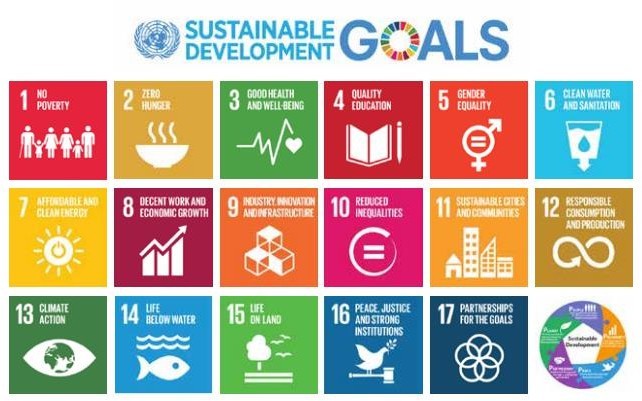
Sustainable Development Goals(SDG)
| SDG No. | Sustainable Development Goal | Statement |
| SDG 1 | No Poverty | End poverty in all its forms by ensuring equal opportunities, social protection, and access to essential resources for everyone. |
| SDG 2 | Zero Hunger | End hunger, achieve food security, improve nutrition, and promote sustainable agriculture for a healthier world. |
| SDG 3 | Good Health and Well-being | Ensure healthy lives and promote well-being for people of all ages through accessible, quality healthcare. |
| SDG 4 | Quality Education | Provide inclusive, equitable, and quality education while promoting lifelong learning opportunities for all. |
| SDG 5 | Gender Equality | Achieve gender equality by empowering women and girls and eliminating all forms of discrimination and violence. |
| SDG 6 | Clean Water and Sanitation | Ensure universal access to safe drinking water and sustainable sanitation services for all. |
| SDG 7 | Affordable and Clean Energy | Provide affordable, reliable, sustainable, and modern energy to support inclusive development. |
| SDG 8 | Decent Work and Economic Growth | Promote sustained economic growth, productive employment, and decent work opportunities for everyone. |
| SDG 9 | Industry, Innovation and Infrastructure | Build resilient infrastructure, foster innovation, and promote sustainable industrialization to drive economic progress. |
| SDG 10 | Reduced Inequalities | Reduce inequalities within and among countries by promoting social, economic, and political inclusion for all. |
| SDG 11 | Sustainable Cities and Communities | Create inclusive, safe, resilient, and sustainable cities and communities that improve quality of life. |
| SDG 12 | Responsible Consumption and Production | Encourage sustainable consumption and production practices that conserve resources and reduce waste. |
| SDG 13 | Climate Action | Take urgent action to combat climate change and strengthen resilience against its impacts. |
| SDG 14 | Life Below Water | Conserve and sustainably use oceans, seas, and marine resources to protect aquatic ecosystems. |
| SDG 15 | Life on Land | Protect terrestrial ecosystems, restore forests, combat desertification, and halt biodiversity loss. |
| SDG 16 | Peace, Justice and Strong Institutions | Promote peaceful and inclusive societies, ensure access to justice, and build accountable institutions. |
| SDG 17 | Partnerships for the Goals | Strengthen global partnerships and cooperation to achieve sustainable development through shared knowledge, resources, and innovation. |
COURSE OUTCOMES
Course: Engineering Mathematics-I Code:BSC101
CO1: Use the matrix algebra techniques comprehensively to analyze systems of linear equations.
CO2: Interpret and apply the concepts of Eigen values and Eigen vectors in solving engineering problems.
CO3: Apply the concept of Taylor-Maclaurin series, indeterminate forms, and Fourier series to solve complex engineering problems.
CO4: Demonstrate proficiency in calculating partial derivatives of functions of several variables and recognize its significance across various engineering disciplines.
CO5: Apply the concept of Jacobian to compute partial derivatives of implicit functions, to establish functional dependence, to estimate errors, approximations and to determine extreme values of functions.
Course: Engineering Physics Code:BSC102
CO1: Understand theory of semiconductors & their applications in some semiconductor devices.
CO2: Demonstrate knowledge of interference & polarization along with their Engineering applications.
CO3: Explain basics of Lasers & optical fibers & their use in some industrial applications.
CO4: Understand concepts & principles in quantum mechanics. Relate them to some applications of physics.
CO5: Identify some modern engineering materials –magnetic, superconductors, Nano-materials and their properties and applications.
Course: Engineering Chemistry Code:BSC103
CO1: Understand the practical approaches and techniques required to effectively monitor water quality
CO2: Select appropriate electroanalytical techniques and methods of material analysis.
CO3: Demonstrate the structure, properties of advanced engineering materials for various technological applications.
CO4: Analyze different types of conventional and alternative fuels.
CO5: Explain causes of corrosion and methods for minimizing corrosion.
Course: Basic Electronics Engineering Code: ESC101
CO1: Explain the working of P-N junction diodes and its applications.
CO2: Identify types of transistor and its applications.
CO3: Understand working of OP-AMP with its applications and use of electronic Instruments.
CO4: Construct and test digital circuits using universal/basic gates and understand the concept of VLSI.
CO5: Identify different electronics sensors and understand basic communication systems.
Course: Basic Electrical Engineering Code: ESC102
CO1: Analyze DC circuits using Kirchhoff’s Laws, The Superposition Theorem and various network simplification techniques.
CO2: Examine magnetic circuits by evaluating parameters such as self-inductance, mutual inductance, and electromotive forces (EMFs).
CO3: Determine AC electrical quantities through the use of mathematical expressions, waveform analysis, and phasor diagrams.
CO4: Analyze and compute voltage, current, and power in both single-phase and three-phase AC electrical systems.
CO5: Explain the operating principles and real-world applications of Single-phase transformers, DC motors, and Induction motors.
Course: Basic Electrical Engineering Code: ESC102
CO1: Analyze DC circuits using Kirchhoff’s Laws, The Superposition Theorem and various network simplification techniques.
CO2: Examine magnetic circuits by evaluating parameters such as self-inductance, mutual inductance, and electromotive forces (EMFs).
CO3: Determine AC electrical quantities through the use of mathematical expressions, waveform analysis, and phasor diagrams.
CO4: Analyze and compute voltage, current, and power in both single-phase and three-phase AC electrical systems.
CO5: Explain the operating principles and real-world applications of Single-phase transformers, DC motors, and Induction motors.
Course: Engineering Graphics Code: ESC103
CO1: Understand the fundamentals of Engineering Graphics and apply the knowledge of projection methods to prepare the drawings for points and lines.
CO2: Construct accurate projections of planes inclined to one or both reference planes using standard drawing methods.
CO3: Construct various Engineering curves and develop the lateral surface of solids.
CO4: Apply the concept of orthographic projection to draw orthographic views for visualizing the physical object.
CO5: Envisage and sketch three-dimensional objects from given orthographic views.
Course: Engineering Mechanics Code:ESC104
CO1: Understand basic concepts of forces, moments and couples in a two-dimensional force system.
CO2: Apply the concept of free body diagram for static equilibrium in a two-dimensional force system.
CO3: Analyze the practical example involving friction and application of two force members.
CO4: Analyze rectilinear and curvilinear motion of particles.
CO5: Apply Newton’s second law, work energy and impulse momentum principles for particles.
Course: Fundamentals of Computer Science and Engineering Code: ESC105
CO1: Understand basic of computing system and Design algorithms for simple computational problems.
CO2: Use mathematical, Logical Operators and Expressions.
CO3: Apply Control Flow structures for decision making.
CO4: Design a solution using Arrays and Strings.
CO5: Design and Apply User Defined functions and Structures in Problem solving using C programming language.
Course: Engineering Workshop Code: VSEC101
CO1: Understand workshop safety rules and industry safety norms.
CO2: Draw a workshop layout and illustrate various sections of a typical workshop.
CO3: Understand the construction, working and functions of various machine tools and their parts.
CO4: Demonstrate proficiency in handling of cutting tools and machine tools to manufacture a job.
CO5: Describe the applications, advantages and operation of advanced machine tools in modern manufacturing.
Course: Design Thinking and Idea Lab Code: VSEC102
CO1: Explain the stages of design thinking and their role in creative problem solving.
CO2: Apply user research methods to empathize and define real-world problems.
CO3: Use ideation techniques to generate and select innovative solutions.
CO4: Build and evaluate prototypes based on user feedback.
CO5: Develop and present practical solutions through collaborative project work.
Course: Professional Communication Skills Code: AEC101
CO1: Apply fundamental communication principles to enhance interpersonal & professional interactions.
CO2: Analyze professional texts and compose effective written communications.
CO3: Utilize techniques and visual aids to deliver engaging and professional oral presentations.
CO4: Demonstrate effective interpersonal skills in team discussions and collaborative tasks. CO5: Demonstrate professional leadership, ethical awareness and effective interpersonal skills in workplace interactions.
Course: Co-Curricular Course-I Code: CCC101
CO1: Demonstrate enhanced physical fitness and mental well-being through consistent participation in physical training, sports, yoga, and meditation.
CO2: Exhibit improved interpersonal skills, self-confidence, self-discipline, time management, stress management and leadership qualities through involvement in personality development and self-defense activities.
CO3: Demonstrate creative thinking and innovation skills by engaging in performing arts, fine arts, and design thinking sessions.
CO4: Exhibition awareness of civic responsibilities, national pride, and teamwork through participation in NCC and community-based programs.
CO5: Apply digital/media tools responsibly for effective communication and collaboration, while understanding safety protocols and basic life-saving techniques.
Course: Engineering Mathematics-II Code:BSC104
CO1: Apply effective mathematical tools to solve the first-order differential equations.
CO2: Apply mathematical techniques to model physical processes, such as Newton’s law of cooling, electrical circuits, rectilinear motion, mass-spring systems, and heat transfer.
CO3: Comprehend advanced integration techniques, including Reduction formulae, Beta functions, Gamma functions, Differentiation under integral sign, which are essential for evaluating multiple integrals and their practical applications.
CO4: Trace curves based on given equations and calculate arc length for various types of curves and understand the concepts of solid geometry by using equations for spheres, cones, and cylinders.
CO5: Apply their knowledge to evaluate multiple integrals and use them to find areas bounded by curves and volumes bounded by surfaces.
Course: Programming and Problem Solving Code:PCC101
CO1. Apply various skills in problem solving.
CO2. Choose appropriate programming constructs and features to solve the problems in diversified domains.
CO3. Demonstrate the ability to implement common string manipulations in Python.
CO4. Exhibit the programming skills for the problem solving using functions.
CO5. Apply Python Programming skills to perform file operations and visualize data using standard libraries for real world problem solving.
Course: Indian Knowledge System Code:IKS101
CO1: Understand traditional Indian scientific knowledge and practices, including agriculture, water harvesting, medicine, and architecture, and evaluate their relevance and application in contemporary contexts.
CO2: Know scientific principles and technological advancements in ancient India in the fields of physics, chemistry, and textile technology, and appreciate their historical significance and practical applications
CO3: Apply knowledge of ancient Indian mathematical concepts and Vedic techniques to solve basic arithmetic and algebraic problems
CO4: Understand ancient Indian advancements in metallurgy and architectural styles, and evaluate their scientific, cultural, and historical contributions to material science and structural design.
CO5: Understand the principles of ancient Indian agricultural practices, Ayurveda, and yoga, and assess their holistic approaches to health, well-being, and sustainable living.
Course: Co-Curricular Course-II Code: CCC102
CO1: Demonstrate improved physical health, fitness, and mental well-being through regular participation in physical training, sports, yoga, and meditation activities.
CO2: Exhibit improved interpersonal skills, self-confidence, self-discipline, time management, stress management and leadership qualities through involvement in personality development and self-defense activities.
CO3: Demonstrate creative thinking and innovation abilities by participating in performing arts, fine arts and design thinking sessions.
CO4: Exhibition awareness of civic responsibilities, national pride and teamwork through engagement in NCC and community-oriented activities.
CO5: Use digital/media tools for communication and collaboration and recognize the importance of fire safety and emergency preparedness through practical training.